
Stuck at the Bottom
Why South Carolina’s System Still Isn’t Working and How the Next Generation Might Finally Change It

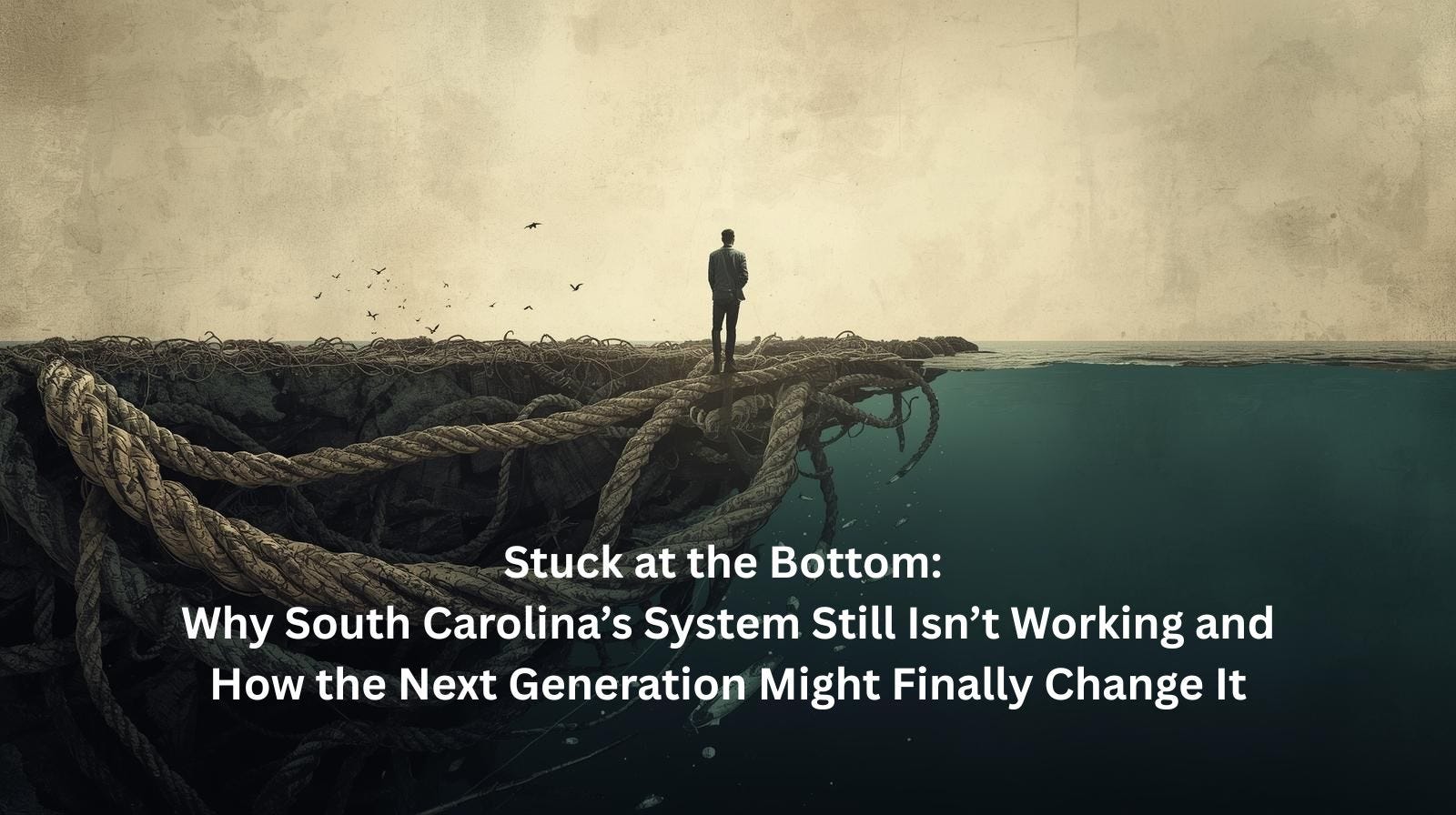
By: Investigative Correspondent
For decades, South Carolina has promised reform, yet measurable progress remains elusive. Despite political turnover, tax incentives for corporations, and endless speeches about economic development, the Palmetto State still ranks near the bottom nationwide in categories like median income, infrastructure quality, and educational outcomes.
We’ve been doing the same thing for 30 years and expecting a different result. At some point, you have to admit the system itself not just the leadership is broken.
That sentiment is spreading. A growing number of residents, especially young entrepreneurs and reform minded professionals, are calling for fundamental structural change not incremental tweaks. They’re pointing to what they call a plantation economy 2.0, where political favoritism and inherited privilege trump innovation and merit.
South Carolina’s median household income still lags far behind the national average, and rural poverty rates exceed 20% in several counties. Meanwhile, the state’s corporate subsidies continue to drain billions from public coffers with few measurable returns.
Economists and watchdog groups point to the same underlying cause, regulatory capture. Major developers and corporations essentially write the laws that affect them. Ordinary citizens get the leftovers underfunded schools, crumbling roads, and property taxes that keep climbing.
The state’s public education system remains fractured not just underfunded but misaligned with real world needs. Technical and trade programs have withered while administrative overhead expands. Teachers, too, are burning out, nearly 1 in 7 classrooms are staffed by uncertified instructors.
Even after decades of reform bills, test score rankings remain stubbornly low. Critics argue that politically connected bureaucrats have turned education into an industry rather than a mission.
South Carolina roads have become a running joke among drivers and a safety hazard among engineers. Billions in repair projects are announced every election cycle, but locals know the truth, many of those funds disappear into layers of consultant contracts and preliminary studies.
Taxpayers feel the squeeze. South Carolina’s total tax burden on working families when property taxes, fuel taxes, and tolls are factored in is disproportionately heavy given the state’s low average income. We’re paying Cadillac prices for bicycle service.
The truth is straightforward but painful, South Carolina’s institutional structures reward consistency, not performance. The same donors fund both major parties. The same development interests dictate zoning and incentives. The same bureaucrats move between state agencies and private contractors.
Citizens are waking up to the reality that small fixes won’t fix a captured system.
But amid all this frustration, there’s a current of hope especially among South Carolina’s younger generation. Entrepreneurs and reformers are realizing that the most powerful weapon they have is bold risk taking.
Hustle when you’re young, it only gets harder later mortgages, kids, obligations. When you’re young, you can afford to fail. And every real change I’ve ever seen came from someone who gambled big early.
It’s an ethos spreading through coffee shops, workshops, and online forums statewide. Stop waiting for permission. Build something different.
Whether that something is a business, a media outlet, or a grassroots reform movement, the goal is clear reclaim power from complacent institutions. South Carolina’s political and economic landscape won’t evolve through press releases or ribbon cuttings. It’ll change when enough people decide the status quo is intolerable.
And that day may be closer than the old guard realizes.
South Carolina stands at a turning point. After decades of stagnation masked by political theater, the conversation has shifted from what small changes might help to what structural revolutions are required. Economic justice, educational reform, and generational courage will decide whether the state remains at the bottom or begins a long overdue ascent. Let’s take back our South Carolina people.